
Garden Valley Project
Garden Valley, Boise County, Idaho, USA

Garden Valley, Boise County, Idaho, USA
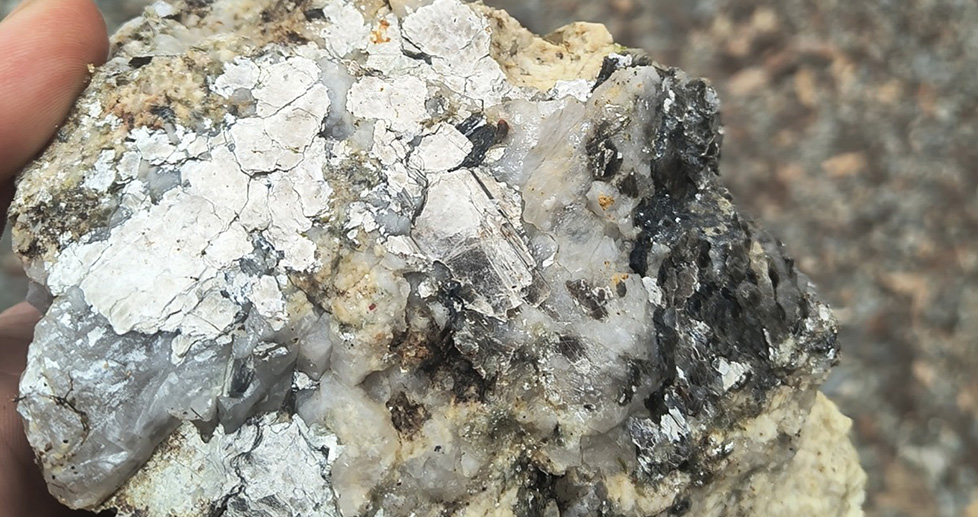
The Project hosts known niobium, tantalum and, rare earth element (REE) mineralisation associated with a pegmatite system hosted by granodiorite rocks along the western margin of the Idaho Batholith .containing combinations of columbite, samarskite, euxenite, monazite, mica and feldspar.
The Project comprises 69 lode mining claims covering multiple historic prospects, including the Vaught–Peck Columbite Mine, Mica Dome, Bowman, Mirandeborde and Nevada No. 1–4 prospects. Together these occurrences define a district-scale rare-metal system with potential for multiple critical mineral commodities.
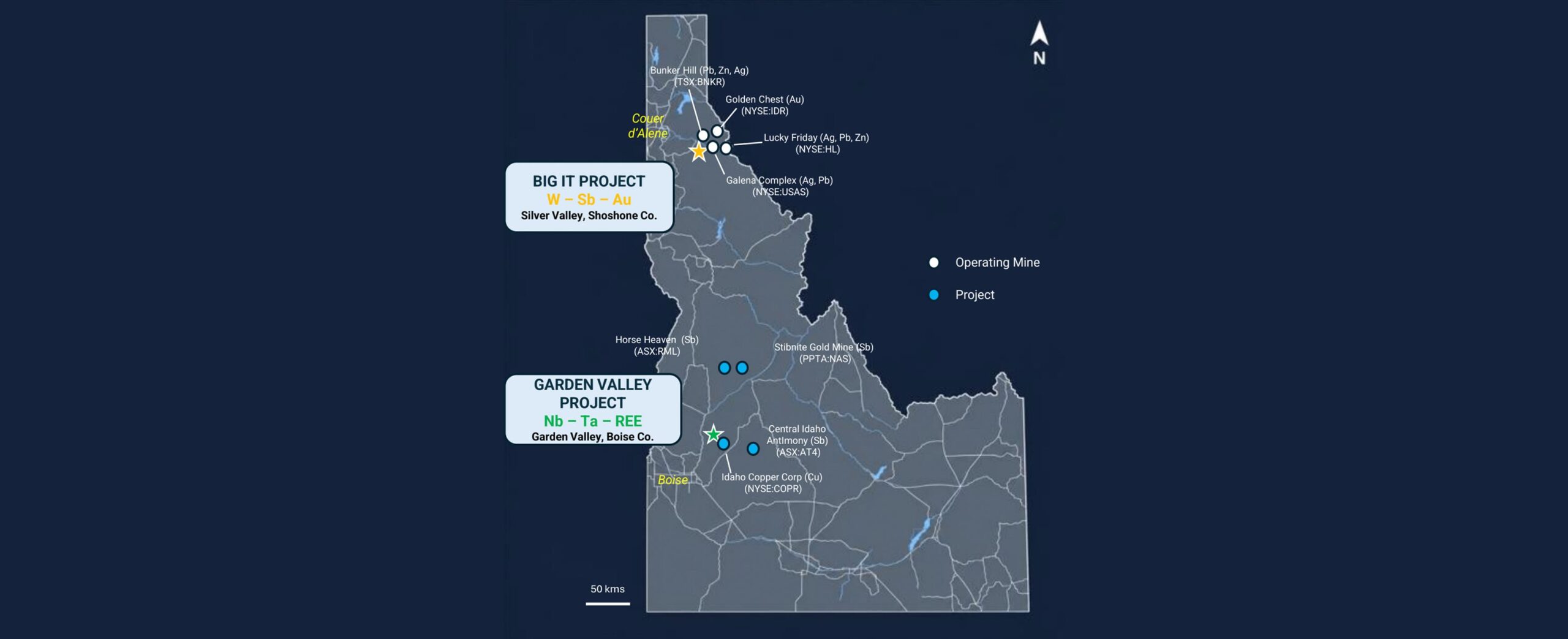
Location: Garden Valley, Boise County, Idaho, USA
The Columbite Project provides exposure to several minerals identified as strategically important for technology, defence and energy transition industries.
Key commodities include niobium (Nb), tantalum (Ta), rare earth elements (REEs) and fluorspar (CaF₂).
The United States currently has no domestic production of niobium or tantalum and remains heavily dependent on imported supply, while fluorspar is also classified as a critical mineral due to its importance in industrial and battery supply chains.
The Garden Valley Project is prospective for multiple U.S. critical minerals including: niobium, tantalum and REE — providing potential to address significant U.S. supply chain vulnerability.
The United States has not had any significant mining of niobium or tantalum since the late 1950s with the U.S. reported as 100% net-import reliant on both metals.
The principal exploration opportunity is the potential for a broader rare-element pegmatite system containing multiple Nb-REE-bearing pegmatite bodies with potential for associated tantalum within the Idaho Batholith.
Historical government work records pegmatites containing combinations of columbite, samarskite, euxenite, monazite, mica and feldspar.
The principal documented occurrence is the Vaught-Peck (or Vaught Columbite) prospect, where intermittent historical mining reportedly recovered approximately 500 lb of columbite (niobium) and historical records establish rare-metal mineralogy at several separate prospects.
The historical Vaught-Peck mine reportedly produced approx. 500 lbs of columbite and identified a substantial zoned pegmatite (250 ft long, at least 200 ft wide) providing a priority target.
Subsequent Idaho compilation work also records an exceptional 309 lb composite crystal comprising a columbite-rich inner zone and samarskite outer zone, illustrating the capacity of the pegmatite system to develop very coarse rare-metal mineralisation.
Historical development includes multiple open cuts, underground mine development, extensive trenching programs, and historic columbite and mica production.
The principal documented occurrence is the Vaught-Peck (or Vaught Columbite) prospect, other prospects within the broader project area include Mica Dome, Bowman, Mirandeborde, and Nevada Nos. 1–4. Collectively these occurrences support exploration for a broader Nb-Ta-REE-bearing pegmatite field.
Vaught–Peck Columbite Mine
Principal historic working; zoned pegmatite with pits/open cuts and underground development. Historical production of ~500 lb columbite reported, and is the highest-priority historical occurrence; demonstrates significant local rare-metal fractionation and coarse Nb-Y-REE mineral development.
Mica Dome
Two pegmatites with plagioclase-quartz-muscovite wall zones and quartz cores; historically assessed for mica / feldspar and supports the presence of multiple differentiated pegmatites across the project area.
Bowman Prospect
Three prospect pits on small pegmatite bodies reported at approximately 3–15 ft wide with strong rare-metal mineralogical indicators.
Mirandeborde Prospect
Pits and short adits expose narrow pegmatites through approximately 300 ft of vertical relief with evidence for repeated mineralised pegmatites over a material vertical interval; a potentially important target corridor.
Nevada No. 1–4
Reported REE- and U-associated phases in poorly exposed pegmatitic occurrences where detailed primary historical information is limited, requiring reconnaissance target field verification, mapping, radiometrics and geochemistry.
The principal exploration opportunity is the potential for a broader rare-element pegmatite system containing multiple Nb-REE-bearing pegmatite bodies with potential for associated tantalum within the Idaho Batholith.
Multiple additional mineralised pegmatite occurrences across the Project provide district-scale exploration upside, with no systematic modern exploration or drilling completed.
Garden Valley Project is prospective for multiple U.S. critical minerals including: niobium, tantalum and REE — providing potential to address significant U.S. supply chain vulnerability
Historical observations of monazite, euxenite and fluorite further support the project's rare earth potential.
The proposed exploration strategy for the Garden Valley Project will be designed to systematically evaluate the known historical rare-element pegmatite occurrences and determine whether these represent isolated mineralised bodies or components of a broader Nb-Ta-REE prospective pegmatite system.
Planned exploration activities may include detailed geological mapping, geochemical sampling programs, radiometric and magnetic surveys, mineralogical and metallurgical studies, drill target generation and initial drilling programmes.
Initial exploration will focus on the historically better-defined Vaught-Peck, Bowman and Mirandeborde prospects, before progressively extending across the wider claim package.
